

Hi all,
I’m looking to gain a better understanding of how “device->timerSyncWithHost()” works. My application uses this command at set intervals.
To test and verify this, we set up an MCU synchronised via PTP to a Linux machine, which also reads the sync signal from a Synchub Pro to create the timestamps. The Linux machine does the actual recording (on a Femto Bolt) and keeps synchronising its clocks.
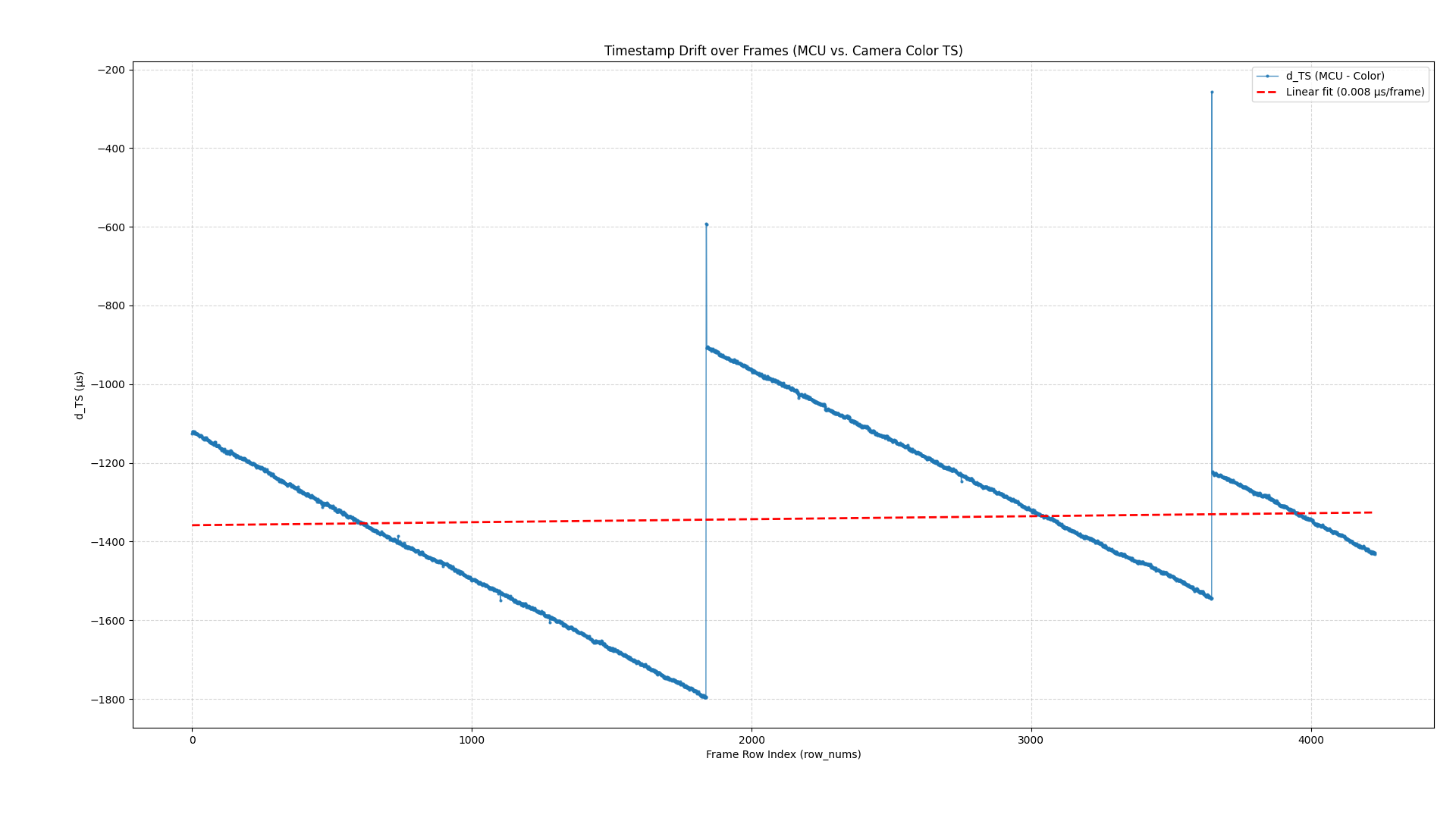
Each time the timer is synchronised with the host clock, there is usually a ~600 µs jump, followed 2–3 frames later by a smaller jump in the opposite direction.
Here’s a segment with a one-minute sync interval.
And here’s one with a two-second interval:
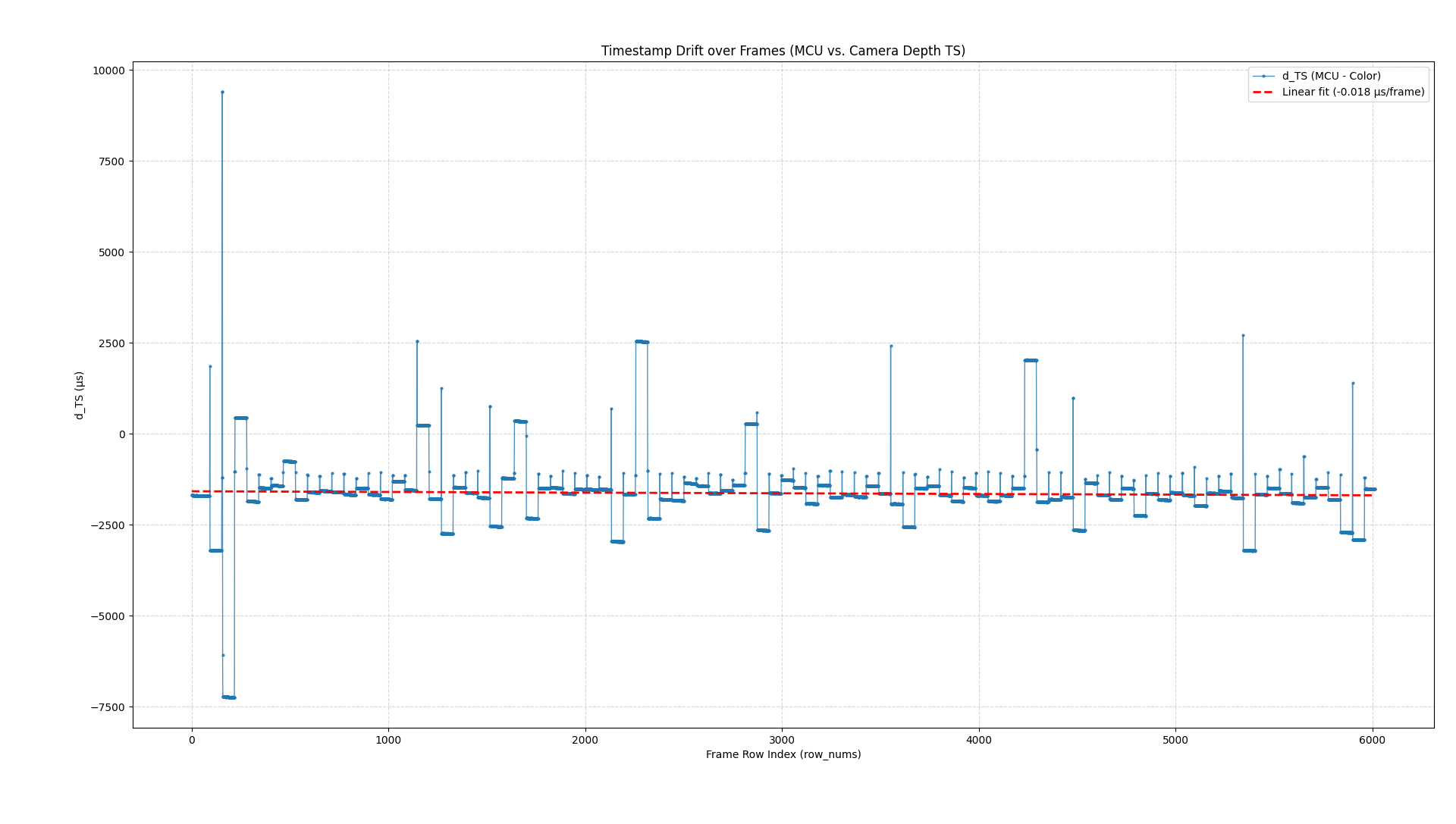
My working theory is that the initial jump is the time that was pushed and applied (with an assumed transmission time), and the follow-up jump is a correction. This leads to the actual difference being around ~200 µs.
Does anyone have a better theory or insight into how the sync works?
Thanks in advance!